
Abdominal muscles are important in providing support and movement to the trunk. These muscles also provide protection to the inner abdominal organs and assists your body in breathing. Your abdominal muscles, along with your back muscles, also provides your body with posturalsupport.
 These muscles also provide protection to the inner abdominal organs and assists your body in breathing. Your abdominal muscles, along with your back muscles, also provides your body with posturalsupport.
How do you exercise these core muscles?
Here are three great exercises that you can do at home to strengthen your abdominal muscles, the body’s support system:
1) Abdominal Crunch
- Lie on your back, with your knees bent and your feet flat  on the floor, about shoulder widthapart.
 on the floor, about shoulder widthapart.
- Place your hands across your chest. Push your lower back into the floor and tighten your abdominal muscles.
- Slowly curl your head and shoulders a few inches off of the floor. Pause for a few seconds andthen slowly lower your head and shoulders back to the starting position.
- Repeat until exhaustion.
2) Abdominal Twist Crunch
- Lie on your back, with your knees bent and your feet flat on the floor, about shoulder widthapart.
- Place your hands across your chest. Push your lower back into the floor and tighten your abdominal muscles.
 the floor and tighten your abdominal muscles.
- Slowly curl your head and shoulders a few inches off of the floor toward your right knee. Pausefor a few seconds and then slowly lower your head and shoulders back to the starting position.
- Slowly curl your head and shoulders a few inches off the floor toward your left knee. Pause fora few seconds and then slowly lower your head and shoulders back to the starting position.
- Continue to alternate your crunches from right to left.
- Repeat until exhaustion.
3) Leg Raise
- Lie on your back and place your arms to the side of your body, with your plams facing down. Rest your shoulders and head on the floor and contract your abdominal muscles.
- Straighten your legs and keep them together. Lift your legs so  that they are several inches off ofthe floor.
 that they are several inches off ofthe floor.
- Slowly raise your legs until they are no more than 40 degrees off of the floor.
- Pause for a few moments and then slowing lower your legs back so that they are back to beingseveral inches off of the floor.
- Repeat until exhaustion.


 3 - Slowly raise your body off of the floor until your arms are straight. Keep your back and legs in a straight line. Do NOT fully extend your arms, by locking out your elbows. This could lead to injury.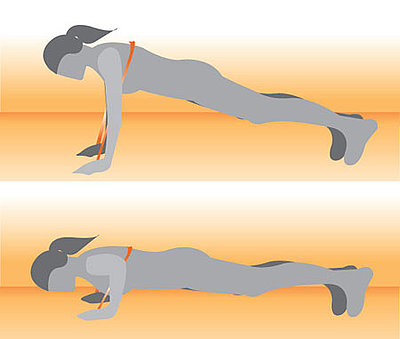


 (Pushdowns)


