Blog Search

Showing posts with label Nutrition. Show all posts

Friday, March 19, 2010

Water and Weight Loss

Can water help me lose weight?

The answer is yes.

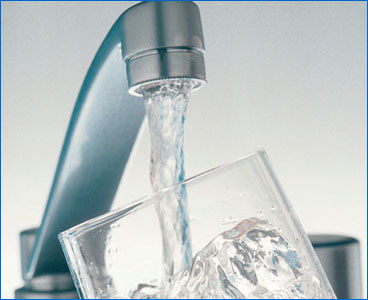
Water can help your body digest food, and also deceive it into thinking that its full.

Water and digestion
Before being distributed to the rest of your body for usage or storage, most of your food is temporarily stored in your stomach. Like food, most of the ingested water is also temporarily stored in your stomach. This food/water mixture together forms a great partnership. The water helps separate the food particles causing them to become more dispersed and spread out. This helps increase the efficiency of absorption.
.
Water and weight loss
As you know, your stomach is a temporary storage bin. Like a storage bin, your stomach reaches a fill point. At this point your stomach sends a signal to your brain letting it know that it has reached capacity. The sensation of being hungry then disappears.
.
Now that you are aware of this negative feedback mechanism, how can it help me lose weight. Again, this brings us back to the great partnership that food and water form with each other. As you may already know, water contains zero calories. This is important, because drinking water with your meal can result in you eating less food. Instead of solely eating, which plays a significant role is the amount of calories you consume, you are also ingesting water, which contains zero calories. What is happening is that you are replacing some of the food that you would normally intake, with calorie-free water. This will result in you consuming less food and less calories. In the long run, consuming less food and less calories will result in weight loss.

Wednesday, July 1, 2009

What do nutrition claims mean?

Have you ever wondered what those bold, eye catching food package labels (Fat free, Fat- reduced, Low fat and Light) actually mean?
Well, what these labels do is highlight a nutritional feature that the particular food product possess. Companies use these labels to their advantage to help influence consumers in buying their product.

Can companies falsely label and incorrectly claim something about a food product?
No. Health Canada and the Canadian Food Inspection Agency (CFIA) are jointly responsible and are depended upon to enforce federal food labelling polices in Canada under the Food and Drugs Act.

Although Health Canada and the CFIA are responsible for enforcing food labelling polices, some loopholes are apparent in which some companies try to exploit. A few of these loopholes will be discussed in greater depth a little later, but first we must get an understanding of what these labels stand for.

Listed bellow are food package labels and their respective meanings.

Free - an amount so small that health experts consider it nutritionally insignificant.
Fat free signifies that the product contains less than 0.5 grams per serving.
Sodium free - less than 5 mg sodium per referenced amount(specific amount of food listed in Nutrition Facts).
Cholesterol free indicates that the product has less than 2 mg cholesterol per serving.

Reduced - the product has 25 percent less of a particular substance than the original.
Fat-reduced indicates that the product has 25 percent less fat than the original one.
Reduced in Calories indicates that the product has at least 25 percent less energy than the food it was compared with.

Low - always associated with a very small amount.
Low Fat indicates that the product contains 3 grams of fat or less per serving.
Low in saturated fat signifies 2 grams or less of saturated and trans fat combined per referenced amount.
Source - always associated with a "significant" amount.
Source of fibre - 2 grams or more fibre per referenced amount.
Good source of calcium - 165 mg or more of calcium per referenced amount.
Light or Lite may refer to anything about the product. This may include taste, texture, colour, fat content, or caloric content . Look at the nutritional information in greater detail to find out which attribute is being referred to as "light."
% M.F. or % B.F. are listed on most dairy products. It indicates the percentage of milk fat and butter fat respectfully.

As stated earlier, there are loopholes when it comes to food labelling.
Example #1
Let’s take a look at the food label Light or Lite. The words Light or Lite can refer to the taste, texture, colour, fat content, or caloric content of the food. This specific label is already very generalized. So, how do you know which attribute the words Light or Lite are referring too? This question can be answered by taking a look at the Nutritional Information or Nutrition Fact label, usually located on the back of the product. The next example explains how.


Example #2
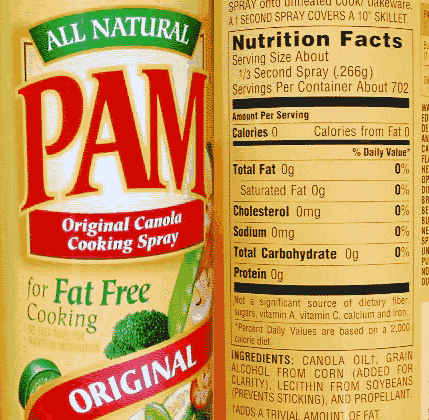
Now let us take a look at the label Fat free. As stated above, Fat free signifies that the food product contains 0.5 grams of fat or less per serving. Note the words "per serving."
By looking at the Nutritional Information label located at the back of a particular product one can untangle any confusion that may be associated with the front label. This particular Nutritional Information label of PAM cooking spray indicates that the fat content of this particular food product is 0 grams per serving. According to Health Canada and the CFIA this product is Fat free. However, taking a closer look at the label, the serving size is only 0.226 grams(an extremely small amount). Because the serving size is so small, it seems as though there is no fat in this product, however, as we all know oil is fat. This product is far from Fat free.

Next time you shop, remember that if a product advertises a particular nutritional feature, you can always back up their claim by checking the products Nutritional Information label. This will help ensure that you are getting the product that you are intending to buy.


References

Health Canada. (2002). Nutrition Labelling... Get the Facts! Retrieved June 27, 2009, from http://www.hc-sc.gc.ca/fn-an/label-etiquet/nutrition/educat/te_background-le_point-08-table1-eng.php