Posted by
Joe Paravan BSc.[Hons.], BEd., CEP
at
9:16 PM
Burn more Calories
On average, every 1% incline increase, runners use roughly 4% more energy. The steeper the hill, the more calories you burn.
Increases Workout Efficiency
Researchers have found that running on an incline activates 9% more muscle fibers, during each stride, compared to exercising with the same efforts on a flat surface.
Well-Rounded Muscle Development
When running on a flat surface you predominately use your hamstrings, quadriceps and calves. When the incline increases you continue to use those muscles, but your glutes also get engaged. Incline running also forces those muscles to work harder, as you are lifting the weight of your body up the hill.
Increase Speed
Those who do not hill train may need to slow down when faced with an uphill challenge on the road. The muscles being used and strengthened, during hill training, are the same muscles required for efficient sprinting. Hill training will translate to faster times when running on flat surfaces, and that is the reason why elite sprinters train on inclines.
Reduce Boredom
Running uphill can keep things interesting, as flat surface running can become boring very quickly. Whether enjoying the beauty outdoors, or on a treadmill indoors, running inclines can help change things up.
Posted by
Joe Paravan BSc.[Hons.], BEd., CEP
at
9:56 PM
Start your morning off with an energizing workout!
High Knees (45 seconds)
Run on the spot, driving your knees toward your chest. Complete this exercise for 45 seconds and as fast as you can.
Spiderman Climber (15 reps on each leg)
Start in a push-up position. Contract your abdominals, pick one foot up off the floor, and slowly bring your knee up outside of your shoulder. Slowly return your leg to the start position and repeat with the opposite leg.
Lateral Run and Pause (8 reps)
From a strong tall posture, perform a high knee run sideways taking three total lateral steps, running on the balls of your feet, driving the elbows back and maintaining good upright posture. Do not cross your feet as you run. On the third step pause and maintain balance for at least 1 to 2 seconds before running in the opposite direction. That's one rep.
Jumping Jacks (45 seconds)
Start with your feet shoulder width apart and your hands at your sides. Simultaneously raise both arms above your head and jump spreading your legs apart laterally. Then jump again and lower your arms to your side and brings your legs back together. Repeat. Complete this exercise for 45 seconds and as fast as you can.
Lateral Jumps (15 reps on each leg)
Starting with both of your feet together. Push-off with your right foot laterally and land on your left foot at a distance of about 4 feet. Once you have landed on your left foot, continue the exercise by jumping laterally onto your right foot at a distance of 4 feet. Repeat.
Mountain Climbers (45 seconds)
Start in a push-up position. Keeping your body straight (in plank form) with your head in line with your body. Now bring your right knee to your chest, then back to starting position. Now bring your left leg to your chest, then back to the starting position. Alternate rapidly with each leg. Complete this exercise for 45 seconds and as fast as you can.
Do this group of exercises 3 times, and enjoy the rest of your day!
Posted by
Joe Paravan BSc.[Hons.], BEd., CEP
at
7:53 AM
Individuals with higher levels of chronic mental stress take longer to recover from a workout, reveals a group of researches at the Yale Stress Centre. Their findings confirm that repairing the body at the microscopic cellular level is influenced by ones state of mind. Do not assume that stress is all bad though. There are good forms of stress like exercise, and our body’s fight-or-flight response to danger.
Good or bad, stress affects hormone levels like cortisol that circulate the body. These hormones are essential to the inflammatory response that repairs damage to the body done by exercise. Hormone levels in a chronically stressed individual are high and negatively affect the body, hindering the typical response to acute stressors like exercise.
Hormone levels are not the only things affected when chronically stressed. Stressed-out individuals tend to sleep less, eat poorly and take less care of themselves. All of these factors influence recuperation and it is not clear whether it is stress that leads to poor nutrition and sleep, or whether it is vise versa. What is clear is that being overstressed is not a situation someone chooses to be in.
If you are in a chronically stressed situation, the right thing to do is not to skip your workout - remember that exercise is a good stress that can help fight against bad stress. Instead, lower your intensity and adjust your workout accordingly to allow your body more time to recuperate between exercise sessions.
Consider implementing yoga or other relaxation techniques to aid in minimizing mental stress. Do not wait until you are in the middle of a breakdown, use these relaxation techniques early and often.
Posted by
Joe Paravan BSc.[Hons.], BEd., CEP
at
1:15 PM
1. Exercise! The combination of resistance training and cardio is your best choice in revving up your metabolism. We are typically focused on cardio and fat loss, but fail to realize what the importance of muscle mass and resistance training are to this subject.
Building muscle is important as it requires energy - increasing your metabolism. The more muscle one has, the more energy is required to maintain it. One study published in the Journal of Applied Physiology found that older men and women increased their metabolism by about 100 calories after 6 months of strength training. The combination of both resistance training and cardio can lead to some great fat loss results, compared to just cardio alone.
2. Eat smaller, balanced meals more frequently and consistently throughout the day. Space your meals out every 2 to 3 hours, and centre them around a lean protein source (egg whites, low-fat cheeses, yogurt, lean meats and poultry, and fish). Side your protein with vegetables and/or fruits, beans and lentils, and some whole grains. Eating these smaller, balanced meals more frequently throughout the day will keep you feeling fuller longer; preventing your blood sugar from spiking (discussed further in #3); and helping you from overeating.
3. Stay away from refined grains, and stick to low glycemic carbohydrates. Products made from refined grains and sugars; such as cakes, cookies, pastas, and many breads are typically high glycemic. Eaten alone, high glycemic foods cause a spike in blood sugar, triggering your body to secrete a flood of insulin; storing all the unused energy as glycogen (in your muscles and your liver), and as fat (in your adipose tissue), and likely causing you to feel hungry shortly after consumption. Sticking to low glycemic index fruits, vegetables, bean and lentils, and whole grains (breads and pastas) will help keep your blood sugar levels more stable and keep you full longer.
Posted by
Joe Paravan BSc.[Hons.], BEd., CEP
at
10:34 AM
If you are looking to perform your best in sport or in exercise, you have to keep your body hydrated throughout the activity. Sweating even as low as one percent of your total body weight can place unneeded stress on your cardiovascular system, and losing more than one percent can impair your physical performance. Sweating causes your blood to become more viscus forcing your heart to work harder in its efforts to provide working muscles with oxygen and fuel. Dehydration can also affect mental sharpness and hand-eye coordination, which can put you in a disadvantage in mentally strenuous activities and competitions.
The American College of Sports Medicine (ACSM) recommends there guidelines for keeping your body hydrated for physical activity:
Bef ore Physical Activity: Drink at least 16 ounces of fluid about two hours beforehand.
During Activity: Drink 5 to 10 ounces every 15 to 20 minutes.
After Activity: Drink 16 ounces for each pound of body weight lost during activity.
Posted by
Joe Paravan BSc.[Hons.], BEd., CEP
at
8:08 PM
National Hockey League players along with other elite athletes are not created overnight. These individuals are the result of numerous years of development and training, starting from early childhood and continuing to adulthood.Researchers from the National Coaching Institute in British Columbia, in the area of development and training methodology, have created a model for long-term athletic development.
The long‑term athletic development model consists of several key stages that span over twenty years.The number of stages is dependant on the sport or activity that is chosen, and is unique to early specialization or late specialization. This model is also based on the biological age (age of physical development), not chronological age (calendar age) of children.As you may already know, all children develop at different rates regardless of their chronological age; hence, the popular phrase, “my child is a late bloomer.”
I am a firm believer of late specialization, given the exception of a few early specialization activities, such as gymnastics, swimming, diving, dancing, and figure skating.However, children pursuing these activities should also be exposed to other forms of physical activity to further their movement skill development.Some major concerns with early specialization before the biological age of 11 and 12, in females and males respectfully are; deficits in movement skills, overuse injuries, early burnout, and sport dropout.Team sports, such as hockey, should use the late specialization sport model.An example of this model follows.
Stage 1: FUNdamental
Biological age: Females 6-9 / Males 6-10 years
The FUNdamental stage is one of importance.At this stage, children should be participating in a wide range of activities and sports for the purpose of having fun and developing basic movement intelligence (repertoire of movement developed since birth).Emphasis should be placed on fun, as enjoyment will lead to long-term adherence to physical activity; furthering athletic development.Exposing children to different terrains (land, water, snow and ice) uncovers a variety of activities and sports that they may wish to pursue later in life, while presently enabling them to develop a broad foundation of essential fundamental movement skills.
The fundamental movement skills, the building blocks for all types of sport and physical activity, should be developed in this stage.These skills include: Agility, Balance, Co-ordination and Speed (ABCs); Catching, Passing, Kicking, and Striking (CPKs); Running, Jumping, Throwing, and Skipping (RJTs); as well as gliding and buoyancy.Along with these skills, children will begin to grasp simple rules and proper etiquette through structured sports and activities.A minimum of 6 to 7 hours a week is required to continue the development of early movement intelligence in children at this stage.
Stage 2: Learning to/and Training to Train
Biological age: Females 10-13 / Males 11-14
The Learning to/and Training to Train stage encompasses one of the most important periods of motor skill development in children.Children from the ages of 10‑11 and 11‑12, in females and males respectfully, are developmentally ready to acquire general sports skills. These skills are the foundation for all athletic development.Ready to acquire these skills, children should be exposed to a broad range of activities, and play at least two or three different sports.Exposure to these activities and sports will allow children to readily adopt motor coordination.If for some reason these fundamental motor skills are not developed between these ages, a significant window of opportunity will be lost, compromising the ability for these children to reach their full athletic potential.
At mid-stage, athletes should begin to focus on two sports of interest, as a commitment of 10-14 hours a week will be required.During this time, athletes should begin to develop strength and individual sport‑specific skills.Strength training should be introduced using plyometric (body resistant) exercises, because bones, ligaments, tendons and muscles are still developing. Emphasis should also be placed on stretching, as flexibility is crucial in preventing injuries in developing bodies.Along with the introduction to training, athletes will begin to understand the importance of proper nutrition and mental preparation.
Toward the end of the stage, athletes should be introduced to proper weight training techniques.These techniques will be important in furthering strength development in the later stages of athletic development.
Stage 3: Training to Compete
Biological age: Females 14-18 / Males 15-19
The Training to Compete stage should focus on increasing overall performance.This is accomplished by further developing sport-specific skills and positional tactics, psychological sport preparation, as well as optimizing fitness.
Fitness programs, tailor-made to the strengths and weaknesses of athletes, will round the development of athletic ability. Part of the fitness program should include training for maximal strength, as strength plays a critical role is all sports and competition.Strength training should be carried out through the use of free weights (dumbbells, barbells and kettlebells), as free weights enable the body to exercise through a full range of motion.A minimum time investment of 20 hours a week is required at this stage and focus should predominantly be on one sport.
Stage 4: Training to Win
Biological age: Females 19+ / Males 20+
The final, Training to Win, stage of elite athlete development focuses on achieving high-level performances in their specified sport.At this point, athletes have established physical, technical, tactical, and mental abilities; however, to maintain this level of performance, high intensity training must be continued at a relatively high volume.Training should include the improvement of general and sport-specific strength and endurance, and sport-specific skill refinement.A time investment of 20-30 hours a week is required at this stage.
The realization of committing to this model is that elite athletes will ultimately be developed.However, from an alternative perspective, the experience acquired can generate future career opportunities, while providing individuals with life-long skills that can transfer to healthy and active living.
Posted by
Joe Paravan BSc.[Hons.], BEd., CEP
at
7:34 PM
If fitness, or getting fit, is important to you then you should realize it's possible to reach your goals in the comfort of your own home. Gym memberships can get quite expensive and they may seem like a good idea at first, but the cost of lengthy contracts may eventually eat away at your wallet. This is money that can be put toward personalizing your own home gym.
First thing's first:
Before you do anything, you need to determine a realistic budget and be conscience about what you're willing to spend in creating your own gym. Being wise with your money is important, but you should also realize that you get what you pay for. You want to make sure the equipment you buy is sturdy enough to stand up to continual use. Sometimes you can get quality used equipment through a local gym or distributor, or you can also use Craigslist as a way to find used equipment on a budget.
Gym Space:
You need to be realistic with your space requirements versus available working space. If you have a room that's too small or already has stuff in it, there are always local storage units you can rent. Storage units are great for those who don't have room in their home, but don't necessarily want to part with their items. Once you have selected the space you'll be working with, you should then measure it out so you have precise figures on what you can fit into the room. You may have lofty goals and a lot of equipment you want to use but you should not congest your area with too much stuff. You want the environment to be pleasurable to work in, not cramped and awkward.
Compare Equipment to Meet Your Goals:
You should be looking for equipment that will help you meet your fitness goals. If you want to increase muscular strength, then you shouldn't buy a treadmill just because it was set at a good price. Also keep in mind that you should be purchasing multipurpose equipment. For example; if it's weight training equipment you're looking for, make sure that it can be used to train multiple muscle groups in a variety of different ways. A pair of adjustable dumbbells and an adjustable bench is always a good place to start. Keep with your plan, compare prices and quality, and stay within your budget.
Depending on your needs, you can start your own personal gym for very little money. Home gyms are readily becoming the solution to many individuals fitness needs. Follow these tips to craft your own space to help your realize your dream of getting a good workout right at home.
Posted by
Joe Paravan BSc.[Hons.], BEd., CEP
at
7:30 PM
Why are your abdominal muscles so important?
Abdominal muscles are important in providing support and movement to the trunk. These muscles also provide protection to the inner abdominal organs and assists your body in breathing. Your abdominal muscles, along with your back muscles, also provides your body with posturalsupport.
How do you exercise these core muscles?
Here are three great exercises that you can do at home to strengthen your abdominal muscles, the body’s support system:
1) Abdominal Crunch
- Lie on your back, with your knees bent and your feet flat on the floor, about shoulder widthapart.
- Place your hands across your chest. Push your lower back into the floor and tighten your abdominal muscles.
- Slowly curl your head and shoulders a few inches off of the floor. Pause for a few seconds andthen slowly lower your head and shoulders back to the starting position.
- Repeat until exhaustion.
2) Abdominal Twist Crunch
- Lie on your back, with your knees bent and your feet flat on the floor, about shoulder widthapart.
- Place your hands across your chest. Push your lower back into the floor and tighten your abdominal muscles.
- Slowly curl your head and shoulders a few inches off of the floor toward your right knee. Pausefor a few seconds and then slowly lower your head and shoulders back to the starting position.
- Slowly curl your head and shoulders a few inches off the floor toward your left knee. Pause fora few seconds and then slowly lower your head and shoulders back to the starting position.
- Continue to alternate your crunches from right to left.
- Repeat until exhaustion.
3) Leg Raise
- Lie on your back and place your arms to the side of your body, with your plams facing down. Rest your shoulders and head on the floor and contract your abdominal muscles.
- Straighten your legs and keep them together. Lift your legs so that they are several inches off ofthe floor.
- Slowly raise your legs until they are no more than 40 degrees off of the floor.
- Pause for a few moments and then slowing lower your legs back so that they are back to beingseveral inches off of the floor.
Posted by
Joe Paravan BSc.[Hons.], BEd., CEP
at
3:52 PM
Overtraining is typically the case when athletes train extensively without adequate rest time. In addition to this, all athletes are different and respond differently to certain training routines and stressors. Mental fatigue can also compound the stresses of training, as training and everyday activities involve a functional mind. If you do play many sports and train on top of that, you may encountour overtraining. Realize; however, that overtraining is difficult to diagnose.
If overtraining is a concern to you, you may want to familiarize yourself with some of the symptoms: tired drained lack of energy general aches and pains sudden drop in performance insomnia headaches increased susceptibility to colds decrease in training capacity and intensity moodiness and irritability depression loss of appetite increase in injury susceptibility
If you are experiencing a wide range of these symptoms, you can further investigate this issue by doing am orthostatic heart rate test. Here is a link that will guide you through the test. http://www.brianmac.co.uk/hrtest.htm
You are the best person to gauge how your body feels. If you do feel these symptoms and are overtraining, you are best to either reduce the amount of exercise, or stop it completely for a few days to allow your body to rest.
Posted by
Joe Paravan BSc.[Hons.], BEd., CEP
at
7:12 PM
It is not unusual to feel soreness after a workout; DOMS (Delayed Onset Muscle Soreness) is the term used.
DOMS is usually felt twelve to fourty-eight hours after the workout, and is usually at it's worse fourty-eight hours after the activity. The soreness can even last a few days longer, decreasing as the days pass.
The soreness is a normal response to unusual exertion and is your body's way of adapting to the stressor. I emphasize the word soreness. If you feel pain, that is likely due to a sustained injury.
Posted by
Joe Paravan BSc.[Hons.], BEd., CEP
at
3:36 PM
Did you know that the human body's skeletal system is composed of a combination of two different muscle fibres?
These two fibres are as follows: 1- Fast Twitch (FT) or Type II (also called white fibres because of their microscopic appearance)
2- Slow Twitch (ST) or Type I (also called red fibres, again because of their microscopic appearance)
FT fibres are more anaerobic (does not rely of oxygen), larger, fatigue quicker, and have a faster contraction speed compared to ST fibres. These qualities make FT fibres ideal for actions that involve quick bursts of power and energy, such as jumping and sprinting. Events such as swimming, long-distance running, or cycling that require endurance, depend on the aerobic (relies of oxygen), smaller, slow contracting ST fibres.
Muscles fibres do not always fall into these two categories. There are also fibres that contain characteristics from both. These fibres fall into the Type II category, further dividing them into Type IIa and Type IIb. The more aerobic Type IIa fibre that contains more surrounding capillaries, thus; expressing greater resistance to fatigue than the anaerobic Type IIb fibre.
Through heredity an individual is dealt a composition of muscle fibres. These fibres cannot be altered by training, i.e. an individual cannot use training stimuli to transform one fibre type to another. However, most skeletal muscle contain both FT and ST fibres. The amount varies from one individual to another, as well as one muscle to another.
A conclusion can be made that individual performances occur as a result of varying percentages of muscle fibre types, which make some individuals better suited to specific activities. That does not mean, however; that training will not improve what fibres you already have.
References Klavora, P. (2004). Foundations Of Exercise Science: Studying Human Movement And Health. Toronto: Sports Books Publisher.
Posted by
Joe Paravan BSc.[Hons.], BEd., CEP
at
10:46 AM
What is a push-up, why is it so difficult to perform, and what muscle groups does it exercise?
A push-up is a plyometric exercise that involves lifting your own body weight off of the ground. It can be difficult for some, and easy for others.
If you are one who finds performing a push-up difficult, not to worry, this is normal. Do not feel frustrated or get embarrassed, your muscles are just not conditioned enough to achieve this feat.
The main muscle group used to perform this exercise is your chest. In addition to your chest; however, your shoulders and triceps are also involved in the action.
How do you perform a proper push-up at your level? If you find doing a typical push-up difficult, try this modified version.
Modified push-ups for the beginner
1 - Lie face down on the floor, legs together and straight with your knees touching the floor.
2 - With your elbows bent, place your palms on the floor beside your shoulders, fingers pointing forward.
3 - Slowly raise your body off of the floor until your arms are straight. Keep your back and legs in a straight line. Do NOT fully extend your arms, by locking out your elbows. This could lead to injury.
Also, make sure that you tighten your abdominal muscles while you perform this exercise to help protect your lower back.
4 - Slowly lower your body until your chest almost touches the floor.
5 - Repeat steps 3 and 4 until fatigued
Once you have mastered this beginner push-up (able to do 12 or more consecutively), it is time to move onto the next level.
Push-ups for the intermediate
1 - Lie face down on the floor, legs together and straight with the balls of your feet touching the floor.
2 - With your elbows bent, place your palms on the floor beside your shoulders, fingers pointing forward.
3 - Slowly raise your body off of the floor until your arms are straight. Keep your back and legs in a straight line. Do NOT fully extend your arms, by locking out your elbows. This could lead to injury.
Also, make sure that you tighten your abdominal muscles while you perform this exercise to help protect your lower back.
4 - Slowly lower your body until your chest almost touches the floor.
5 - Repeat steps 3 and 4 until fatigued.
Once you have mastered the intermediate push-up and what a greater challenge, try this advanced version using an exercise band.
Push-ups for the advanced
1 - Place an exercise band around your upper back and below your underarms. Wrap the ends of the bands around your palms so that your hands are free to perform the push-up.
2 - Now, lie face down on the floor, legs together and straight with the balls of your feet touching the floor.
3 - With your elbows bent, place your palms on the floor beside your shoulders, fingers pointing forward.
4 - Slowly raise your body off of the floor until your arms are straight. Keep your back and legs in a straight line. Do NOT fully extend your arms, by locking out your elbows. This could lead to injury.
Also, make sure that you tighten your abdominal muscles while you perform this exercise to help protect your lower back.
5 - Slowly lower your body until your chest almost touches the floor.
6 - Repeat steps 4 and 5 until fatigued.
Other advanced push-ups can also me performed. Be creative and think of ways to make a push-up more difficult.
Posted by
Joe Paravan BSc.[Hons.], BEd., CEP
at
10:43 AM
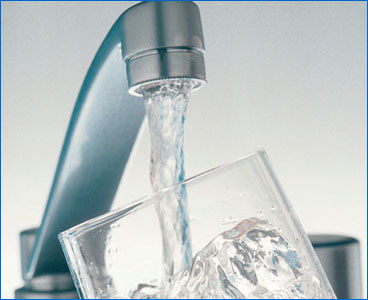
Can water help me lose weight?
The answer is yes.
Water can help your body digest food, and also deceive it into thinking that its full.
Water and digestion Before being distributed to the rest of your body for usage or storage, most of your food is temporarily stored in your stomach. Like food, most of the ingested water is also temporarily stored in your stomach. This food/water mixture together forms a great partnership. The water helps separate the food particles causing them to become more dispersed and spread out. This helps increase the efficiency of absorption.
.
Water and weight loss As you know, your stomach is a temporary storage bin. Like a storage bin, your stomach reaches a fill point. At this point your stomach sends a signal to your brain letting it know that it has reached capacity. The sensation of being hungry then disappears.
.
Now that you are aware of this negative feedback mechanism, how can it help me lose weight. Again, this brings us back to the great partnership that food and water form with each other. As you may already know, water contains zero calories. This is important, because drinking water with your meal can result in you eating less food. Instead of solely eating, which plays a significant role is the amount of calories you consume, you are also ingesting water, which contains zero calories. What is happening is that you are replacing some of the food that you would normally intake, with calorie-free water. This will result in you consuming less food and less calories. In the long run, consuming less food and less calories will result in weight loss.
Posted by
Joe Paravan BSc.[Hons.], BEd., CEP
at
3:02 PM
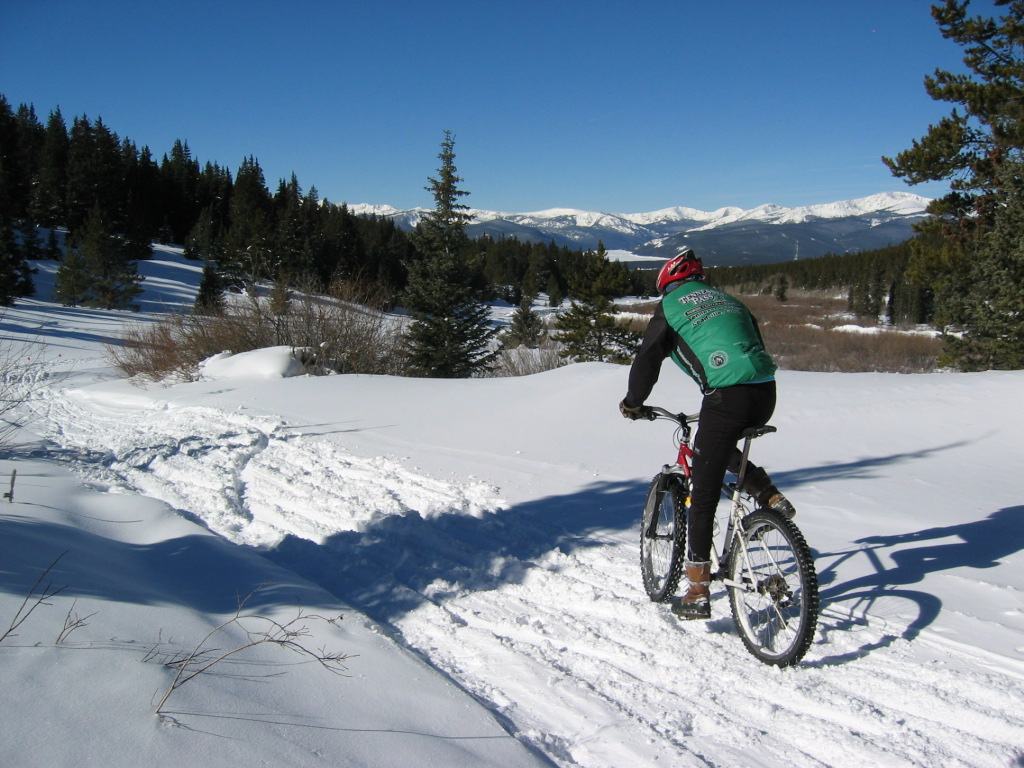
Living in Ottawa during the winter months can either be pleasant or weary, depending on what we make of it. What can we do to make our Ottawa winters enjoyable, while exercising and taking part in some fun outdoor activities? How about incorporating Fartlek?
What is Fartlek, you may ask? Fartlek, which means "speed play" in Swedish, is a cardiovascular training method that focuses on endurance.
.
Typically used by runners, the Fartlek method of training is implemented during the preparatory portion of their season. The reason they use this method is because it’s extremely flexible, and also develops basic cardiovascular endurance.
Fartlek can be done anywhere, at any time, and all year round. It is the combination of many cardiovascular training methods, like long slow distance training, interval training, pace and tempo training, hill training, fast burst training at various distances and lengths, training in parks, streets, beaches, etc. It can also be applied to any form of cardiovascular activity, such as swimming, cycling, skating, cross-country skiing, etc.
An example of a cycling training program using the Fartlek method is as follows:
10 min easy pace
4 min fast pace
2 min easy pace
2 min hill climb
2 min fast pace
30 sec all-out pace
4 min easy pace
10 min moderate pace
10 min easy pace
. Remember, Fartlek training is just a change in time, tempo, distance and terrain. Mix these four elements up, and you'll have yourself a custom made Fartlek training program. Where better to practice Fartlek, than in Ottawa, were outdoor winter activities are virtually endless.
Take advantage of the Rideau Canal and skate on the world’s largest skating rink. Go snow shoeing, or cross-country skiing and explore the beauty of Ottawa’s endless snow trails. While you’re out there enjoying the winter, don't forget to incorporate some Fartlek. It’s easy, never boring, and you can create a great workout right on the spot.
References
Klavora, P. (2004). Foundations Of Exercise Science: Studying Human Movement And Health. Toronto: Sports Books Publisher.
Posted by
Joe Paravan BSc.[Hons.], BEd., CEP
at
6:49 PM
Is it important to encourage children to participate in physical activity and sport?
Yes!
First off, there are immediate benefits to early exercise. These include:
an increase in self-confidence
reduction in stress and depression
weight control
continued development of healthy bones, muscles and joints
Secondly, evidence has shown that children who have received parental encouragement to participate in physical activity and sport will be more active as adults, compared to children who have been sedentary and lacked parental support.
.
Now start getting these children off the couch and moving!
Here are ways to get and keep your children active:
Be a role model - be physically active yourself
Provide encouragement - be positive - build their self-confidence
Provide opportunities for your child to participate in sport and physical activity
- provide them with transportation and appropriate equipment
- participate in family or group activities - register them in after school programs or sports teams
Remember, the most important factor to physical activity adherence is participant enjoyment. Give your child an opportunity to experience a variety of different activities, sports and programs, and give them the ability to choose ones they like.
References
Wold, B,. & Anderssen, N. (1992). Health promotion aspects of family and peer influences on sport participation. International Journal of Sport Psychology, 23, 343-359.
Posted by
Joe Paravan BSc.[Hons.], BEd., CEP
at
5:43 PM
For some, cardiovascular exercise may not be the most enjoyable aspect of fitness. However, it is and should be an important part of every workout routine. Not only does it get your heart pumping and increase the amount of calories your burn, but it also has other very important physiological implications.
With regular moderate to high intensity cardiovascular exercise the body becomes more adapted and conditioned to physical stressors.
The heart will increase in size and strength, which will enable it to push out more oxygenated blood to parts of the body. Blood volume and lung volume will increase, and the body will become more efficient in using oxygen.
Due to the body's positive physiological changes and increased cardiovascular efficiency, resting heart rate will decrease and so will blood pressure, if it were initially high.
The benefits of cardiovascular exercise are not only limited to positive changes in the cardiorespiratory system, they also have many positive effects on other body systems including the musculoskeletal system.
With all of its benefits in mind, be sure to make cardio a staple in your workout routine.
References
Heyward, V. (2006) Advanced Fitness Assessment and Exercise Prescriptio: Fifth Edition. Champaign, IL: Human Kinetics.
Posted by
Joe Paravan BSc.[Hons.], BEd., CEP
at
3:42 PM
You may already know that your triceps make up more of your arm than your biceps do, yet most people still decide to focus more of their attention on training their biceps and less attention on training their triceps.
As depicted in the word triceps meaning three heads, this muscule group is comprised of the long head, lateral head, and medial head.
Long Head The most inner head, located on the back of your arm next to your back. Lateral Head The head located closest to the outside of the body. Medial Head The smallest of the three heads, located deep and between the long and lateral heads.
How do you go about training these muscles? Well, try encorporating these exercises into your routine.
-Overhead exercises were your elbows are beside your ears.
(Overhead Tricep Extension)
-Exercises in which your upper arms are behind or beside your body, such as dips or pushdowns.
(Dips) (Pushdowns)
-Exercises such as lying tricep extensions or close grip bench press.
(Lying Tricep Extension) (Close-Grip Bench Press)
Always remember to vary your tricep exercises to get all three heads working. This will help you achieve the toned, muscular and symmetrical arms that you are looking for.
Posted by
Joe Paravan BSc.[Hons.], BEd., CEP
at
12:20 PM
First things first. What are the risk factors of Cardiovascular Disease (CVD)?
Unmodifiable risk factors (The factors you have no control over) - Family history of premature Cardiovascular Disease (less than 55 years in men and less than 65 years in women) - Gender (Men at higher risk than females up to the age of 55) - Advancing Age (Men 45 and up, Women 55 and up) - Ethnic Characteristics (Individuals of African decent are at greater risk)
Modifiable risk factors (The factors you have control over) - Smoking - Diabetes (blood sugar disorder) - Hypertension (high blood pressure) - Dyslipidemia (blood lipid imbalance) - Obesity, more specifically abdominal obesity (fat surrounding the internal organs of the abdominal cavity) - Psychological factors (state of stress or depression) - The consumption of Fruits and Vegetables (consume more fruits and vegetables) - The consumption of Alcohol (Drink 1, but not more then 1 alcoholic beverage a day. Preferably red wine.) - *** [Most Important]*** The amount of Physical Activity (exercise on a regular basis)
Research has indicated that with regular physical activity the risk of CVD notably decreases. This is because, regular physical activity helps reduce most of the modifiable risk factors associated with CVD. These risk factors include; diabetes, hypertension, dyslipidemia, obesity and abdominal obesity, and the psychological factors associated with being sedentary.
The three other modifiable risk factors (smoking, the consumption of fruits and vegetables, and the consumption of alcohol) can be corrected with a change in lifestyle habits.
Reduce your risk of CVD and maintain a healthy body by practicing healthy lifestyle habits, and by exercising regularly.
References
Advanced Fitness Assessment and Exercise Prescription, Fifth Edition, by Vivian H. Heyward, 2006, Champaign, IL: Human Kinetics.
Posted by
Joe Paravan BSc.[Hons.], BEd., CEP
at
12:40 AM
Have you ever wondered what those bold, eye catching food package labels (Fat free, Fat- reduced, Low fat and Light) actually mean?
Well, what these labels do is highlight a nutritional feature that the particular food product possess. Companies use these labels to their advantage to help influence consumers in buying their product.
Can companies falsely label and incorrectly claim something about a food product?
No. Health Canada and the Canadian Food Inspection Agency (CFIA) are jointly responsible and are depended upon to enforce federal food labelling polices in Canada under the Food and Drugs Act.
Although Health Canada and the CFIA are responsible for enforcing food labelling polices, some loopholes are apparent in which some companies try to exploit. A few of these loopholes will be discussed in greater depth a little later, but first we must get an understanding of what these labels stand for.
Listed bellow are food package labels and their respective meanings.
Free - an amount so small that health experts consider it nutritionally insignificant. Fat free signifies that the product contains less than 0.5 grams per serving. Sodium free - less than 5 mg sodium per referenced amount(specific amount of food listed in Nutrition Facts). Cholesterol free indicates that the product has less than 2 mg cholesterol per serving.
Reduced - the product has 25 percent less of a particular substance than the original. Fat-reduced indicates that the product has 25 percent less fat than the original one. Reduced in Calories indicates that the product has at least 25 percent less energy than the food it was compared with.
Low - always associated with a very small amount. Low Fat indicates that the product contains 3 grams of fat or less per serving. Low in saturated fat signifies 2 grams or less of saturated and trans fat combined per referenced amount.
Source - always associated with a "significant" amount. Source of fibre - 2 grams or more fibre per referenced amount. Good source of calcium - 165 mg or more of calcium per referenced amount.
Light or Lite may refer to anything about the product. This may include taste, texture, colour, fat content, or caloric content . Look at the nutritional information in greater detail to find out which attribute is being referred to as "light."
% M.F. or % B.F. are listed on most dairy products. It indicates the percentage of milk fat and butter fat respectfully.
As stated earlier, there are loopholes when it comes to food labelling.
Example #1 Let’s take a look at the food label Light or Lite. The words Light or Lite can refer to the taste, texture, colour, fat content, or caloric content of the food. This specific label is already very generalized. So, how do you know which attribute the words Light or Lite are referring too? This question can be answered by taking a look at the Nutritional Information or Nutrition Fact label, usually located on the back of the product. The next example explains how.
Example #2 Now let us take a look at the label Fat free. As stated above, Fat free signifies that the food product contains 0.5 grams of fat or less per serving. Note the words "per serving." By looking at the Nutritional Information label located at the back of a particular product one can untangle any confusion that may be associated with the front label. This particular Nutritional Information label of PAM cooking spray indicates that the fat content of this particular food product is 0 grams per serving. According to Health Canada and the CFIA this product is Fat free. However, taking a closer look at the label, the serving size is only 0.226 grams(an extremely small amount). Because the serving size is so small, it seems as though there is no fat in this product, however, as we all know oil is fat. This product is far from Fat free.
Next time you shop, remember that if a product advertises a particular nutritional feature, you can always back up their claim by checking the products Nutritional Information label. This will help ensure that you are getting the product that you are intending to buy.
Joe is a trainer and a teacher who is passionate about health, fitness and sport. A graduate from the University of Ottawa with a bachelor of Science degree with Honours in Human Kinetics and a bachelor of Education degree, Joe thrives on his ability to combine the art of teaching with his knowledge of sport, human anatomy, exercise physiology, biomechanics, sports psychology, and nutrition. Joe is also a certified Exercise Physiologist and a fitness enthusiast who is regularly exposed to many forms of training in which he continuously implements into his workouts and the workouts of others. As a teacher and life-long learner, Joe is always on the lookout for new training techniques and methods that he can use to benefit the needs of his clientele.
Fit-Ed.offers interactive and rewarding fitness classes that are designed for both Men and Women of all ages and fitness levels. The classes incorporate a mix of plyometrics, core work, agility, balance, resistance training, and cardio into one complete program. Fit-Ed.'s combo training program fuses together circuit and cross training techniques that will help you attain the most out of your workout, assist you in achieving your fitness goals, and cause you to break a sweat.
Visit us at www.fit-ed.ca for more information on fitness programs and our other available services. Or email us at info@fit-ed.ca.







 3 - Slowly raise your body off of the floor until your arms are straight. Keep your back and legs in a straight line. Do NOT fully extend your arms, by locking out your elbows. This could lead to injury.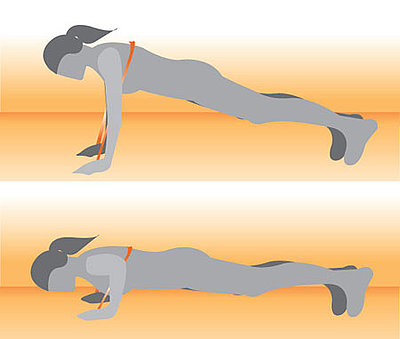







 (Pushdowns)